
Industry Focus – Pesticide Granule Dust Management: Current Situation and Challenges
As the pesticide industry continues to pursue “quality and efficiency improvement” and “reduced dosage and loss control,” dust control for granules has become a key area of focus for manufacturers:
- Efficacy and Utilization Efficiency: Excessive dust can lead to pesticide drift, compromising target deposition and reducing field control effectiveness.
- Application Safety and Health Protection: Fine dust particles may be inhaled by operators, posing occupational health risks and raising environmental concerns.
- Formulation Stability and Process Optimization: During the processing and transport of Water Dispersible Granules (WG), particle breakage can generate dust, potentially affecting dissolution performance and leading to nozzle blockage.
- International Market Access: Major global markets have specific requirements for dust values. Test data compliant with the MT 171.1 standard has become a key factor for products seeking access to high-end markets.
Standard Interpretation — The MT 171.1 Standard and Its Role in Evaluating the Physical Quality of Pesticide Granules
CIPAC MT 171.1 is an internationally recognized method for evaluating dust from pesticide granules, providing a clear quantitative classification system for the physical quality of granular products.

Source: CIPAC MT 171.1
The method classifies dust values into three categories:
- Dust Value 0 – 10: Class 1 – Nearly Dust-free. This range is considered an important physical indicator of high-quality Water Dispersible Granules (WG).
- Dust Value > 10 – 25: Class 2 – Essentially Non-dusty.
- Dust Value > 25: Class 3 – Dusty. Products in this category may present higher risks of drift and inhalation during field application.
The Solution: Palas® DustView II – Fully Automated Dust Measurement System
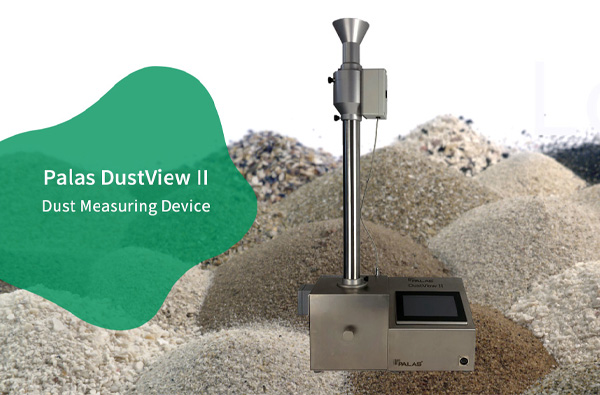
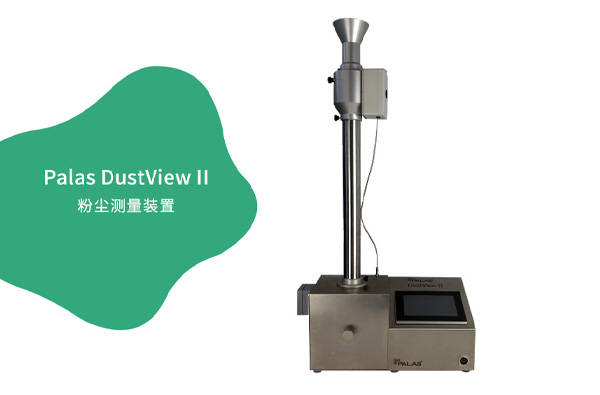
This system is a fully automated dust characterization device specifically developed for powders and bulk materials. Its methodology complies with the CIPAC MT 171.1 international standard and has been applied across related industries worldwide. Utilizing precision optical extinction principles, it simulates real handling scenarios, providing objective, real-time dust behavior data under controlled free-fall and impact conditions, offering dust value references that meet international standards.
Technical Advantages:
- Efficient Measurement: Completes measurement and generates reports within 40 seconds, effectively detecting fine dust particles.
- High Repeatability: Laser extinction technology ensures objective, reproducible results.
- Realistic Simulation: Free-fall and impact conditions replicate actual handling processes.
- User-Friendly Operation: Fully automated system minimizes manual errors.
Application Scenarios:
- Quality control and incoming material inspection
- Formulation R&D and process optimization
- Additive effectiveness evaluation
- Production process monitoring
- Product performance comparative analysis
Technical Empowerment – Dust Measurement Applications Across the Pesticide Granule Workflow
The Palas® DustView II provides test results that serve as a data reference for R&D, production, and sales of pesticide granules:
R&D Optimization: Analysis Tool for Formulation Development
- Balancing Wettability and Strength: Supports formulators in analyzing the relationship between granule wettability and mechanical strength, providing data to optimize the ratio of disintegrants and binders.
- Coating Process Evaluation: Enables quantitative assessment of how different coating materials affect particle abrasion resistance.
Quality Control: Testing Tool for Production
- Batch Consistency: Can be used to monitor drying and granulation processes, providing data to support batch-to-batch consistency.
- Inspection Efficiency: Requires only a small sample, with 40-second automated testing helping to improve quality control turnaround.
Sales Support: Quantitative Reference for Product Quality
- International Benchmarking: Provides test reports aligned with the CIPAC standard framework, serving as reference documentation for products targeting international markets.
- Differentiation: Uses quantifiable dust values to demonstrate product characteristics related to application safety and environmental friendliness.
Let Dust Control Be the Foundation of Your Quality Advantage
Dust value is not only a technical parameter reflecting the physical quality of pesticide granules but also a quantitative reference for product performance in environmental safety and application security. Gaining the ability to quantify dust values ≤25 provides crucial reference for accessing broader markets.
Palas® DustView II demo appointments are now available. We invite you to schedule a session to learn how this device provides technical reference for production optimization and quality control in pesticide granule manufacturing.
Register for a Demo — DustView II
(Follow the WeChat Official Account “德国帕剌斯仪器”, click “Contact Us” in the menu to access the registration page.)
For any inquiries, please feel free to contact us.
Palas Instruments (Shanghai) Co., Ltd.
Email: info@palas.com.cn
Tel: 021-5785 0190