
Follow us:

Products

Hotline
Download

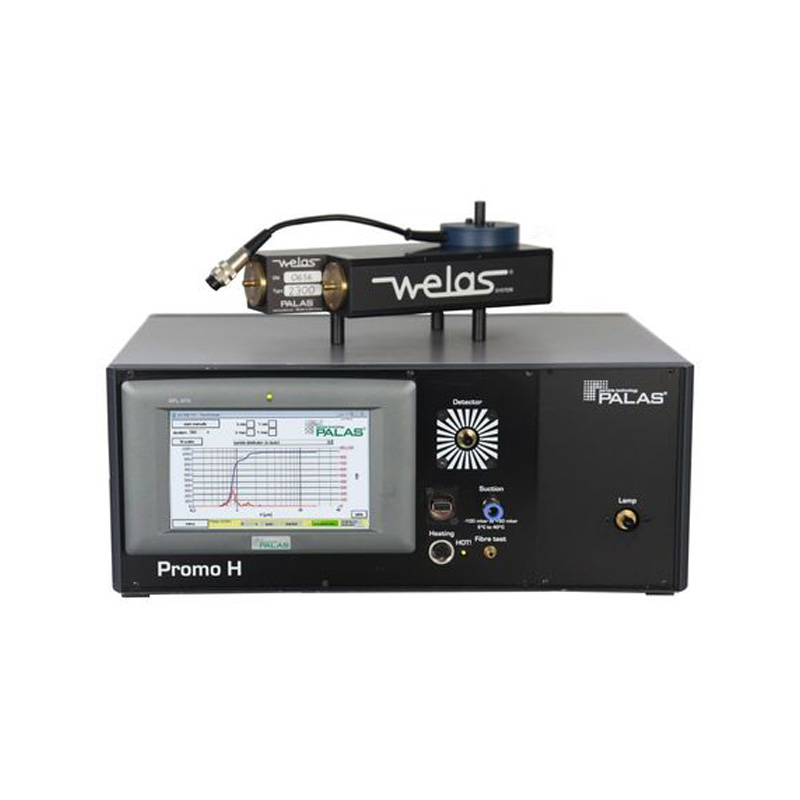
Promo® 2000 H

With heating regulation up to 250 °C for welas® aerosol sensors

•    Measuring range of 0.2 to 100 µm (4 measuring ranges selectable in one device)
•    Up to four measuring ranges in only one device:
      -   0,2 µm – 10 µm
      -   0,3 µm – 17 µm
      -   0,6 µm – 40 µm
      -   2 µm – 100 µm (additionally for sensors 2300 and 2500)
•    Up to 128 size channels per measuring range
•    Concentration range of 1 particle/cm3 to 106 particles/cm3
•    Calibration curves for different refractive indices
•    Very high and reproducible counting efficiency rate starting at 0.2 µm
•    Pressure-resistant up to 10 bar (optional)
•    Heatable to 250 °C (optional)
•    Optical fibre technology
•    Simple operation with a large touch display
•    Calibration, cleaning and lamp replacement can all be performed independently by the customer
•    External control by RS 232 or Ethernet
•    With analysis software PDAnalyze
•    Optional: Software PDControl for operation as welas® digital available
•    Low maintenance
•    Reliable function
•    Reduces your operating expenses

Description

Depending on the composition of the aerosol to be measured, i.e. the carrier gas component and the particle material, pressure and temperature changes in the carrier gas can significantly influence the particle size distribution, e.g. due to condensation or evaporation.

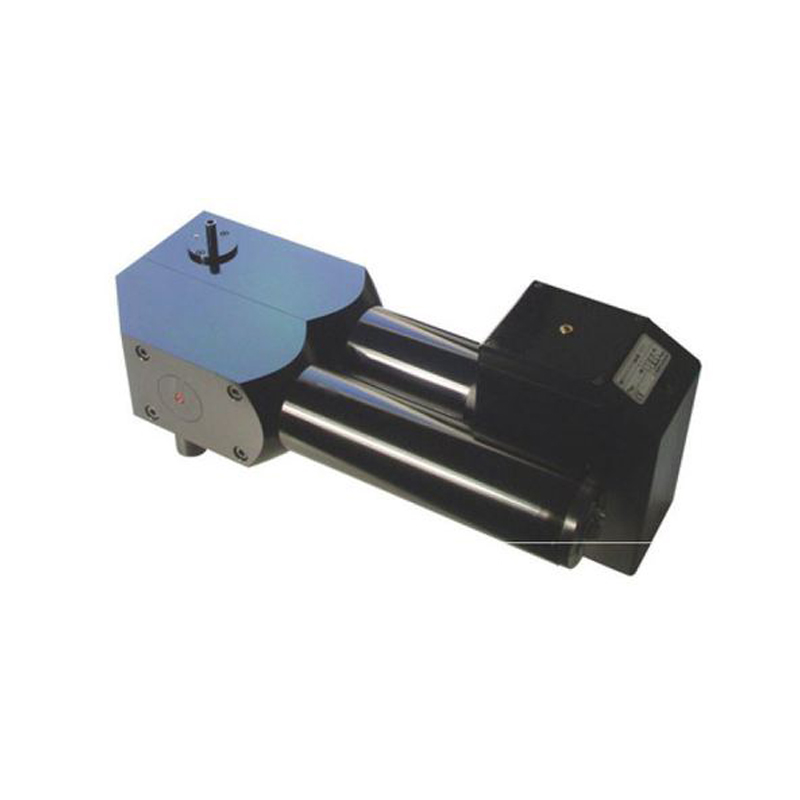
For this reason, the welas® aerosol sensors welas® 2070 H, HP, 2100 H, HP, 2200 H, HP, 2300 H, HP and welas® 2500 H, HP are equipped with a heatable and, as required, pressure-tight cuvette to ensure isobaric and isothermal sampling into the sensor’s measurement volume.

The Promo® 2000 H model variant also offers heating regulation for temperatures up to 250 °C for the aerosol sensors with heatable cuvette.

The Promo® is usually calibrated for the operating volume flow. In the Promo® 2000 H version, regulation of the sampling volume flow is performed independently by the customer taking the temperature and pressure into consideration.
Datasheet

Interfaces

USB, Ethernet, RS232/485, Wi-Fi

Measurement range (size)

0,2 µm – 10 µm,
0,3 µm – 17 µm,
0,6 µm – 40 µm,
2 µm – 100 µm

Size channels

up to 128 (64/decade)

Measuring principle

Optical light-scattering

Measurement range (number CN)

< 1 • 106 particles/cm3

Volume flow

5 l/min

Data acquisition

20 MHz processor, 256 raw data channels, digital

Light source

Xenon arc lamp 35 W

Power consumption

100 W

User interface

Touch screen, 800 • 480 pixel, 7"

Housing

Table housing, optionally with mounting brackets for rack-mounting

Dimensions

185 • 450 • 315 mm (H • W • D) (19")

Support options

Direct remote access, Palas® webserver service

Weight

approx. 8 kg (control unit), approx. 2.8 kg (sensor)

Operating system

Windows embedded

Data logger storage

4 GB Compact Flash

Software

PDControl, FTControl, PDAnalyze

Installation conditions

+5 – +40 °C (control unit)

Benefits

•    Measuring range of 0.2 to 100 µm (4 measuring ranges selectable in one device)
•    Up to four measuring ranges in only one device:
      -   0,2 µm – 10 µm
      -   0,3 µm – 17 µm
      -   0,6 µm – 40 µm
      -   2 µm – 100 µm (additionally for sensors 2300 and 2500)
•    Up to 128 size channels per measuring range
•    Concentration range of 1 particle/cm3 to 106 particles/cm3
•    Calibration curves for different refractive indices
•    Very high and reproducible counting efficiency rate starting at 0.2 µm
•    Pressure-resistant up to 10 bar (optional)
•    Heatable to 250 °C (optional)
•    Optical fibre technology
•    Simple operation with a large touch display
•    Calibration, cleaning and lamp replacement can all be performed independently by the customer
•    External control by RS 232 or Ethernet
•    With analysis software PDAnalyze
•    Optional: Software PDControl for operation as welas® digital available
•    Low maintenance
•    Reliable function
•    Reduces your operating expenses

Applications


•    Emission monitoring of installations
•    Control of grinding and classification processes
•    Monitoring of production processes in the food, pharmaceuticals and chemicals industries
•    Testing of complete filters, inertial and wet separators or electrostatic precipitators